|
Fossil evidence shows Redwood forests grew all accross the Northern Hemisphere before the last Glacial Epoch when the planet was wetter and much warmer.
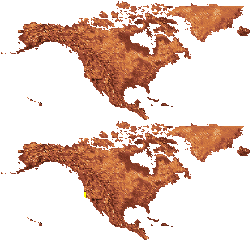
COASTAL CALIFORNIA REDWOODS
Sequoia Sempervirens
The surviving forests of Coastal Redwoods are confined to a narrow strip of land (just 30 miles wide and 450 miles long) which hugs the coast of Northern California from Salmon Creek in Big Sur (just south of Monterey) to the Chetco River in the North (just over the Oregon border). The climate in this area is temperate and moist. Average annual rainfall is over 50 inches, someplaces over 100 inches. And it all falls in the winter months. In the summer coastal fog plays a significant role in moderating the temperature and maintaining the humidity.
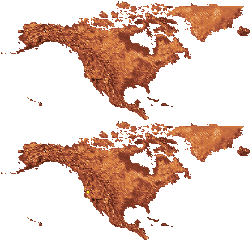 GIANT CALIFORNIA REDWOODS
Sequoiadendron Giganteum
The surviving Giant Redwoods are limited to 75 groves (spread across 35,000 acres) on the western slopes of the Sierra Nevada Mountains of California, between 4,500 and 7,500 ft in elevation. Winter snows and spring rains combine to provide this area with 40 to 60 inches of annual moisture.
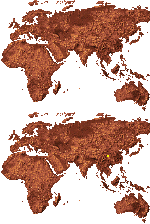 THE DAWN REDWOOD
Metasequoia Glyptostroboides
Until 1944 this tree was known only by its fossil record. In that year surviving Dawn Redwood trees (numbering only a few hundred) were discovered in a remote valley of central China where the average annual rainfall is 50" and the elevation 4,000 ft. Since its discovery seeds have been distributed worldwide and specimens are now grown as ornamentals.
| 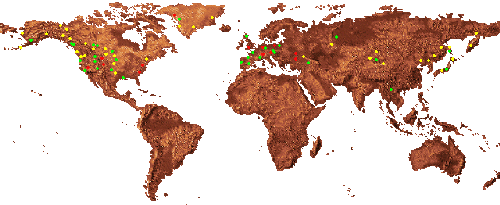
 Sequoia Sempervirens
 Sequoiadendron Giganteum
 Metasequoia Glyptostroboides