- DIVISION
- GYMNOSPERMS
- Producing seeds without protective casings.
- GYMNOSPERMS
- ORDER
- CONIFERAIE
Conifers- Long straight grained trunks.
- Soft wood and seed bearing cones.
- Evolved 100 million years ago.
- The dominant forest 30 million years ago.
- Limited to the Temperate Zone of the Northern Hemisphere.
- CONIFERAIE
- FAMILY
- TAXODIACEA
Swamp Cypress- Round cones and needle shaped leaves.
- TAXODIACEA
- GENUS
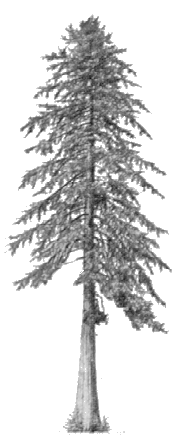
- SEQUOIA SEMPERVIRENS
Coastal Redwoods- Sequoia for Chief Sequoah of the Cherokee Nation and 'semper virens' translates as 'always living' from the Latin.
- These are the tallest trees in the world. Living record is 367.8 feet.
- Average age is 800 years. Living record is 2200 yrs.
- The bole (trunk) is straight, the top tapers to a spire and the base flares.
- The root system of Coastal Redwood trees runs between 6 and 10 feet deep, radiating to a maximum of 50'.
- These Redwoods replace their needles on a rotating (rather than annual) basis and in addition to producing seeds they send new shoots up from the birdseyes at their base and in their root systems.
- The California Redwoods also have in common fibrous bark (often 1 to 2 feet thick), a reddish brown heartwood, an absence of resin cells and an abundance of tannin.
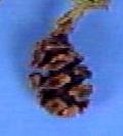
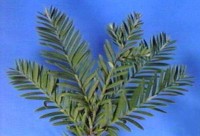
- The Sempervirens cones are less than 1" in diameter and the seeds only 1/16th ". An estimated 123,00 seeds per pound. (Now that's information compression technology!) The cones of the Giant Sequoia run slightly larger (1 1/2" to 2 1/2") with seeds running 91,00 per pound.
- SEQUOIA SEMPERVIRENS
- GENUS
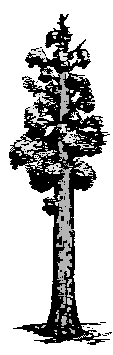
- SEQUOIA GIGANTAEA
Giant Redwoods- The world's largest trees in girth and mass. the oldest 3,000 yrs.
- The oldest living tree is a California Bristlecone Pine (4,900 yrs).
- Virtually all remaining Giant Redwood trees are held in public trust
- SEQUOIA GIGANTAEA
- GENUS
- METASEQUOIA GLYPTOSTROBIADES
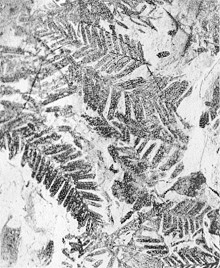
Dawn Redwood- Identical to the tree captured in the fossil record. Only a few survived the millenia and were discovered in 1944 in an isolated valley of Central China.
- METASEQUOIA GLYPTOSTROBIADES