Chapter One: Before the Blue
Just as the Beatles were born when John Lennon met Paul McCartney, so to was The Beat when Jim Harvey met Sherilyn McClure.
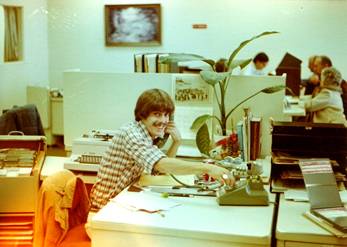
I first met Jim when I moved to San Francisco in November 1978. We were both working at a Social Security field office near the Pacific Ocean. A week after I moved there, the People's Temple committed mass suicide in Guyana. A week later, S.F. mayor George Moscone and supervisor Harvey Milk were assassinated. "What do you think of our City now?" Jim asked.
|
|
For over a year I knew Jim as one of the swinging singles of San Francisco, a carefree town still enjoying a carefree time. But by early 1980 he was in love and wanted to move to Sacramento. As part of his job, he had the opportunity to talk with other Social Security offices there. And that's how he found Sherilyn.
For several months they knew each other only by phone. She wanted to start a new life in San Francisco, and they plotted their mutual transfers. Jim was always quite animated during these phone calls. He and Sherilyn shared one essential trait: They demanded from each moment the full glory of life, and would not bow before any of the world's more mundane conventions. Thus, although they accomplished their transfer by the summer and once again lived in separate cities, they had become linked forever.
Sherilyn's arrival in San Francisco, along with friend and roommate Todd Gearou, marked the beginning of an exodus of Sacramentans that would form the nucleus of The Beat. These included Kördt Beisinger, D'Arcy McGaffic, Kevin Austin, and others who had pursued the dramatic arts in school and had come to the world's newest city to build a new life.
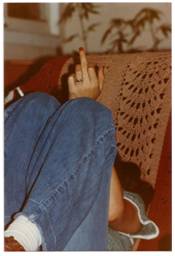 |
Like many others, I fell in love with Sherilyn as soon as I met her. Her intensity and insight far exceeded the formal schooling she had abandoned. Her beauty was rarely matched, even though she hated her nose. Her warmth was unequaled, even literally. Anyone who touched her arm realized that her passion for life flowed through her veins.
Yet the time had not arrived for baseball, or any other sport. It was still a time for wild parties, for Halloween in the Castro, when everybody was someone else, or perhaps a truer self. No one had the faintest idea that softball was to play such an important role in our lives.
Except for Dennis Harvey.
The Social Security Administration, like most federal agencies, had a large regional office in San Francisco, the administrative capital of the West. It was located on Van Ness Avenue. Several workers from the regional office joined up with a few from the field offices to form a team in the early eighties called the Van Ness Monsters. Sure, it's a stretch. But they were a hell of a team.
Dennis Harvey, Jim’s older brother, was a key player on The Monsters. When he heard I had played some softball before transferring to S.F., he asked me to try out for the team. I met some great guys, including a laughing teddy bear named Dave Hamner, and I still have one of their schedules on my bulletin board. Being a weak hitter and suspect outfielder, I did little to break into a solid lineup, and only lasted a year. But the bug had been placed, the connection made, a thread not broken in the great pattern of life. The Monsters would become interwoven into the fabric of the early Beat.
But not yet.
By the mid-80's, the great San Francisco party scene had faded a bit. Reagan had been president for too long, a national repudiation of progressive thought and living. AIDS had cast a pall on the sexual revolution, and casual intimacy seemed a less inviting manner of growing closer. Like our ancient ancestors sitting on the Savannah with their first idle time, we sought new ways to relate and enjoy life.
I'm not sure who first suggested playing volleyball. I'm pretty sure Jim was back in town by then, having loved and lost in Sacramento. But Sherilyn, Todd, or even Kördt (yes, Kördt) could have been the one. And I'm not sure if the first game was played at Parkside Field. But it was that field that brought us together in sport.
Most of us lived on the bay side of town, and took the L-Taraval streetcar together to Parkside, a beautiful field overlooking the Pacific Ocean. Most of it was dedicated to one ballfield, with home plate on the ocean side facing inland to a natural outfield "wall" of towering pines. Near the pines was a space to set up volleyball, far enough away to avoid interfering with a game, near enough for the occasional home run shot to come rolling into our court.
Invitingly.
But still with intimidation, for we were far from a "team" in all but the most essential aspect. It was that one aspect, however, that would mold us: the willingness to support each other. Through all the challenges, all the learning, all the competition, we never placed anything above the caring and respect we felt for each other. And we knew, somehow, that this was the essence of team sport. We could and would go through many changes, but we would always have that to come back to.
And there were more of us. Jim had found a lifelong companion in Marc DalBianco, a cross between Conchita and a back-street brawler who would spit on a hypocrite and die for a friend. His fellow East-Bay import, Mary Pactwa, was a fireplug competitor who would join Sherilyn on the early all-gender Beat (a rarity in S.F. open softball). Was it also then that Todd's brother Kent Gearou, and his girlfriend June Dibble began to play with us? We were certainly open to inviting others to join, so long as they shared that dedication.
The volleyball days were full of learning. One moment that stands out for me was a time in between games, when just a few of us were hitting the ball back and forth. Ended up as two-on-two, with Jim and I on a team. Only a few times in my life have I ever felt in such sync with another human being. Every move seemed anticipated and finely planned, yet was so natural. We instinctively knew how to cover for each other, and laughed all the while at the grace of our own movements. Such also, we learned, was the essence of sport.
By the summer of 1986, we were expanding our sporting repertoire. Some of us started going to the Polo Fields in Golden Gate Park, to ride a few games with the Prince. Talley Ho!! But seriously, folks, we thought we'd try out touch football at one of the many pick-up scrimmages there. One fine Saturday we met Dan Ulmann, a spry scarecrow of a guy with the speed of a wide receiver and the kindness of a good listener. A perfect combination for the group. I started bringing along Steve Bruckman, a lanky law school buddy and New York transplant looking for some way to balance that weird stuff that lawyering does to your brain. But the meeting with the greatest impact was even more tenuous.
I was supposed to be a lawyer in 1986, but just missed passing the bar exam. The reasons were mostly humbling, but one was perhaps - fate? I worked that year as a paralegal in a downtown law firm while waiting to take the test again. It was there that I met Todd Sattler.
Todd was another law-ish sports enthusiast looking for involvement. As tall as Jim on a good day, and a champion high-school wrestler, he brought that same duet of intensity and compassion. But it was not just his own psyche that brought it.
I still remember that sunny day at the Polo Fields, mostly like any other, a bunch of guys running around testing their limits, when a simply dressed woman walked quietly toward the field, laid out a small blanket, and sat down to watch us. She brought a book to fill the time, yet we never really left her attention. She was eloquent. When we stopped and sat around to visit, she went from stranger to friend in a moment.
She was Kathy Bloom. And she was the Woman in White.
Centuries ago, the Samurai warriors of Japan developed a philosophy called the Code of Bushido. Along with describing the honor and duty of the samurai, it posed the eternal quest for balance between the sword and the chrysanthemum. The samurai's dilemma: maintaining the strength of self, knowing that greater strength lay beyond the self.
In the Middle Ages, the Lady of the Lake provided the essence that transformed a chaotic lust for power into the search for the holy grail of salvation. And in the movie The Natural, the Woman in White three times re-enters the hero's life, shattering facades to help him find his deeper strength.
The Woman in White is one of the gods of baseball. Or goddess, if you like. And it is only through the ritual of the game that one understands their meaning.
Kathy was not the only such essence in The Beat's history. Indeed, there was another who would later help resurrect the team from its ashes. But as the compliment to Sherilyn's Lady in Red, she helped bond us even more tightly. We did not yet know it, but we had become a team.
The winter of '86-'87 was long, cold, and wet. And dark, always the dark. Long nights and dreary days that slowly sapped the spirit, numbed the mind, bowed the body. Last year's dreams were distant memories, and there was precious little to inspire new ones. The very will to do anything seemed taken away, with only habit to get us out of bed, off to work (if there was any), eat, and return to hibernation. Life had blossomed, and died. Nothing left now but to fill in the days.
On such day in February, when there was no place left to go but every direction to choose, four guys went to a muddy diamond at Balboa Park with the idea of starting a softball team: Jim and Dennis Harvey, Kevin Austin, and myself. It was tough just bending over at first, throwing seemed unnatural, the balls splatted in the mud, and I wasn't in the mood for Dennis telling me how to play the infield. But at the end of the afternoon, as we sat around dirty and sore, able to share new dreams, we knew that the game had already started to change us.
Jim and Marc lived in the Civic Center of San Francisco, a few blocks from City Hall and just as close to Lang Field. Lang is the crown jewel of the city's softball fields; two diamonds face each other on half a city block, with Depression-era cement grandstands framing one corner. There was also a field to the side, mainly used for soccer and picnics, that we would use when Lang itself was busy. One night in particular I remember, when the Gay Olympics (go ahead and sue me) came to San Francisco. We were standing outside looking in as the horns blared the triumphant entry of athletes from all over the world. Even Kördt Beisinger, the most cynical, foul-mouthed human being I have ever met, stood there with tears in his eyes, wishing he could participate.
After a while we felt strong enough to go to Moscone Field and look for some pickup games. Moscone was near North Beach, had four diamonds, and could almost always guarantee a game, as the fields were full of teams and players waiting for the season to start. During one of those games, when I was a runner on second, a soft pop fly was hit behind third base. As the third baseman and shortstop drifted to catch the ball, I realized no one was paying attention to third base. When one of them caught the ball, I scampered over, more than happy to have "stolen" a base. This was something I had learned at my father's knee as we had watched the game on television together. "Every player has to pay attention every play," he said. It would be years, though, till that lesson reached its full glory.
The one lesson we hadn't learned, however, was that baseball was a business, even city league softball. So when we went to register, we found out we were weeks late. We could not play an "official" game until the summer season. Undeterred, we found other rogue teams to challenge, like the San Francisco Brewing Company. The Brewers were a bar team looking to hone their skills before entering league play. We probably played them six or eight times, and won three or four. We were especially proud that we could play everyone, regardless of skill, certainly regardless of gender, and still win.
There were two off-field events that helped define the character of the team during its prologue. The first was finding its name. After a "Name the Team" contest, Kevin declared his own entry the winner: The Beat. Claimed it was derived from the English Beat, then popularized by Elvis Costello. I thought it came from the Beatles, and referred to how we're all notes in the same chord. Or that our full name was the San Francisco Beat. No matter. The game was strong enough to tune our divergent rhythms. We indeed had become The Beat.
The second event was starting a newsletter. With a name like The Beat, could there be any other publication than On The Beat? It was after one of the Brewer games, while we were sitting at Pat O'Shea's, an Irish sports bar in the avenues where you could still get a pint for a buck while hashing out the days action. During a pause I remembered the fun of putting together my school paper, found a blank sheet of paper, and started to free hand.
Banner and headline were easy. The creative stroke: The Coach's Corner, a place for Jim's reflections on the game starting on the lower right front page. Many editions are on the website. The very first was done on an Adam computer (a Coleco game plug-in, of all things), with unjustified columns that we cut out and pasted on a light board. It was rough, but full of energy. We laughed at our nicknames and worried about our injuries ("Beat-nicks"). Did we know we had begun our diary of how the game would change us?
And so The Beat was ready to begin its history. But, like the Beatles changing Pete Best for Ringo Starr, we would have one more major change before our coming out. Dennis Harvey was still a Van Ness Monster, and his name would be on two rosters, a league no-no. We argued the tricks we could play versus the integrity of the game, and perhaps even some personal rivalries crept into our thinking. There was also this big galook of a guy named John Palmer, a rough-edged talent who needed a team more than any of us then realized. A Moscone regular, he was just gentle enough a giant to fit the team. In the end, we made the first roster move in Beat history, adding John and dropping Dennis just before opening day. We were now ready.
I once said that there is no greater honor than being a member of this team. Let the record show that Dennis Harvey was, and always will be, a member of The Beat.
