Experiment 18
Radiation Measurement
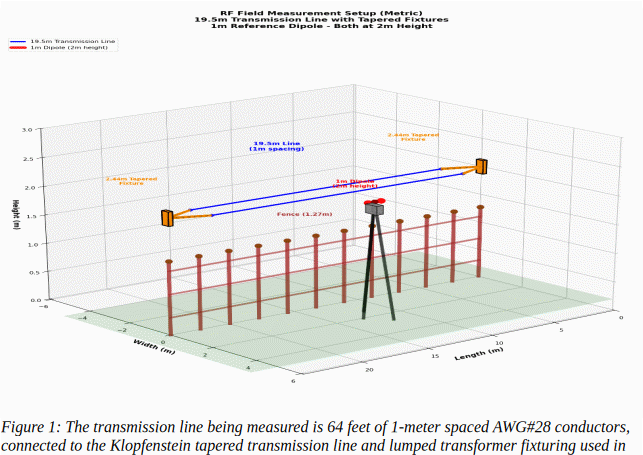
This Experiment measures a length of 1m spaced AWG#28 conductor transmission line using a calibrated Field Probe1. The goal is a meaningful estimate of the region of radiation of total power lost to radiation along an approximately 64 foot length of 2-conductor balanced transmission line fixtured with Klopfenstein tapered transformers by making measurements at discrete positions along the length.
The line is fixtured using the Klopfenstein tapered transmission line transformers used in previous measurements where high transmission was observed. 50-200 ohm lumped transformer test fixtures using T-130-17 4:8 transformers were connected between the long test cables and the 200 ohm input of the tapered line as shown in Figure1
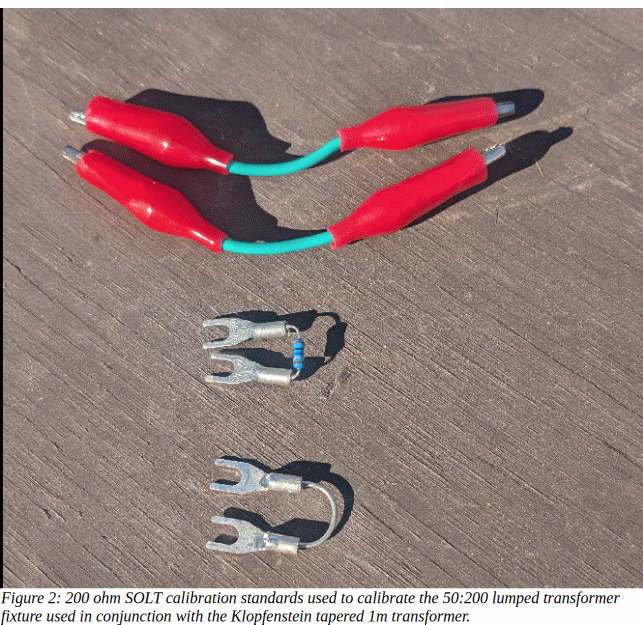
Calibration was performed at the output of the lumped transformer with 200 ohm calibration standards . The S)hort, (L)oad and (T)hru standards are shown in Figure 2. The (O) calibration was performed with no connections.
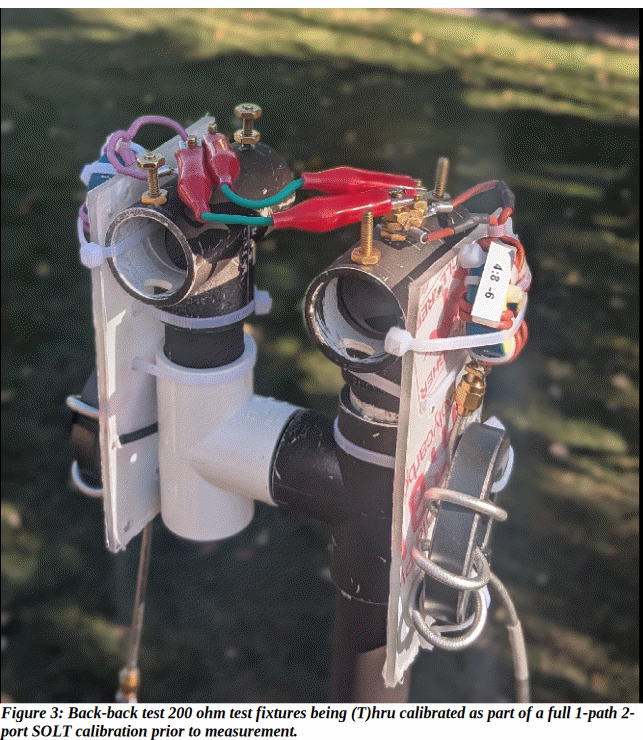
The (T)hru calibration as part of the complete SOLT calibration process is shown in Figure 3.
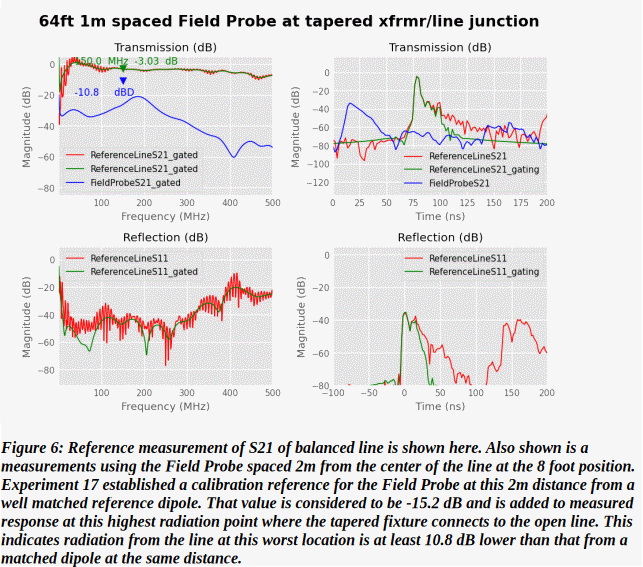
The initial reference measurement was a basic 1-path 2-port measurement of the tapered fixtures and the line together. Port 1 was the south end of the LUT while Port 2 was the north end. Measured results are shown in green in Figure 6.
Once that data was gathered and verified to be similar to the same measurement performed in Experiment 5, the output of Port 2 fixture was terminated in 50 ohms. The test cable was then moved to the output SMA of the Field Probe for all of the following measurements.
It should be noted that this method left the effects of one 50:200 ohm lumped transformer in subsequent measurements. The calibration was performed with 200 ohm fixtures but the Field Probe measurement removed one of those fixtures so the error correction due to it should be removed for a precise measurement. While it is possible to de-embed them2, this was not done so Field Probe measurements were over-stated by the loss of that fixture.
That error can be approximated as half the back-back S21 of a measurement of the two test fixtures together from a 50 ohm calibration . Combined loss for two fixtures was separately measured in Figure 3 of Appendix 1 so the loss for one can be estimated by dividing the back-back measurement of the two fixtures in half. The estimated value of this additional error is about .4 dB and this value should be subtracted from the dBD measurements to get a more precise value for antenna factor or other absolute calculations. .
Field Probe measurements were made at 4 foot spacings, beginning 4 feet before the Port 1 end of the line to the 64 position. Additional measurements were made difficult by foliage obstruction.
A measurement at the 12 foot position is shown in Figure
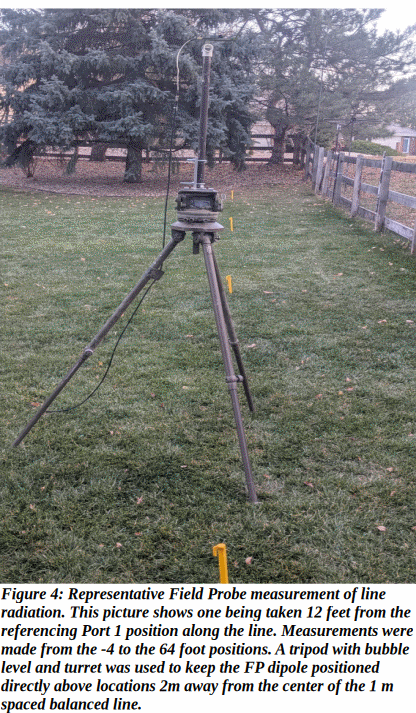
Figure 5 provides a graph of the radiation measured along the line as a function of position with field probe calibration corrections from Experiment 17 applied. Thus the radiation values can be directly compared to that of a well matched reference dipole.
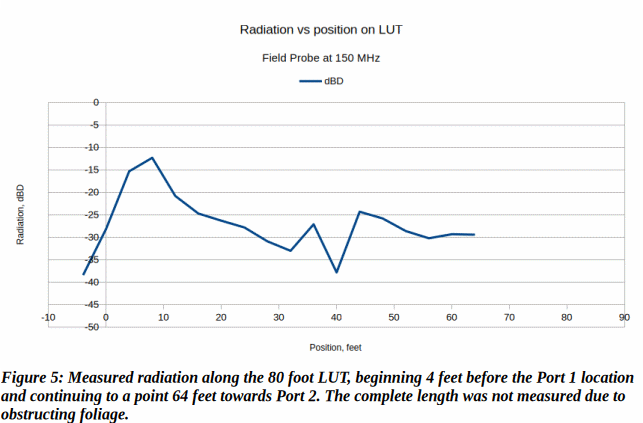
The reference measurement is compared to the highest of the many Field Probe measurements which followed. As seen in Figure 5 this occurred at the 8 foot point from the Port 1 end, the location of the wide end of the Klopfenstein taper where the connection to the 64 foot length of the balanced line was made. The comparison, adjusted for the calibration factor for the Field Probe at 150 MHz is shown in Figure 6.
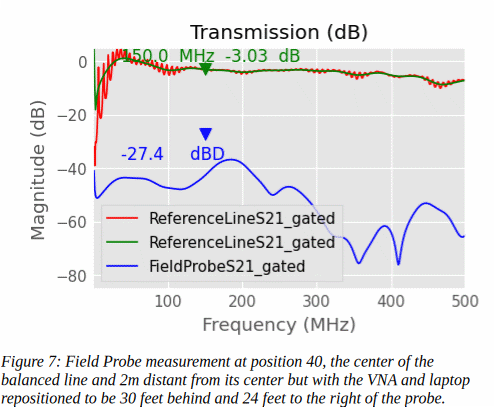
After examining the first data, it was realized that the peak near the 40 foot position was at the location of the VNA and hosting laptop computer. This is also the region where the experimenter was moving around while the data was being recorded. This raised the question of whether direct VNA leakage rather than line radiation was being measured.
To test this thesis, a first repeat measurement was made with the VNA moved moved about 38’ away from the probe . The stimulus from Port 1 of the VNA was applied at the south/left end of the LUT. These results are shown in Figure 7.
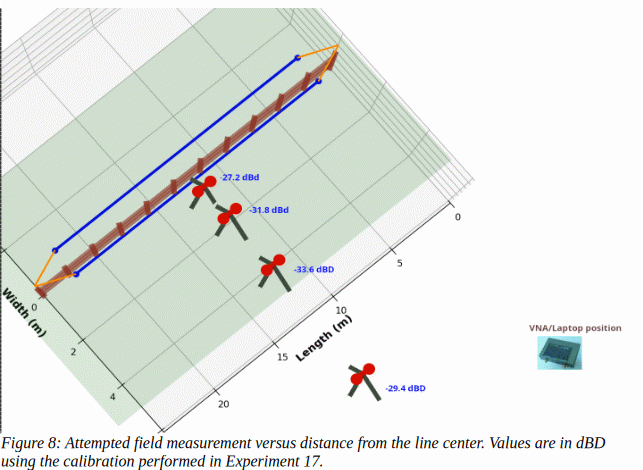
The next day, several measurements at the 40 foot position were performed but with the VNA and laptop computer moved about 30 feet behind and 32 feet to the right of the line center. For these measurements the test fixtures and cables were reversed so that the north/right end of the LUT was driven as Port 1, the reverse of previous measurements which had previously stimulated the south/left end of the LUT as sketched. Figure 8 shows the setup and measured values when stimulus was applied at the new “0” length position where VNA stimulus as Port 1 was applied. The “position” scales as shown in Figures 5 and Figure 8 are reversed from each other with the “0” position always being the stimulus and Port 1 end.
Measurements were made at 1m, 2m, 4m, 8m from the line center. One additional measurement was made with the Port 1 test cable terminated at the Port 1 end so that the LUT would not be excited from the VNA but the VNA itself and its 50-foot long test cable were. Presumably this left any leakage from the VNA active.
As shown, measured field decreased from the 1m value out to 4m spacing but then increased again as the probe moved further from the line. However, leakage directly from the VNA appears to not have corrupted the measurement since the last measurement made from the 8m-distant position but closest to the VNA resulted in the noise floor value. In that case with the Port 1 test cable terminated at the LUT instead of exciting it, the reported level was -81.3 dBD and S21 was constant with flat noise over the entire measurement frequency range.
These results might lead to the conclusion that below a certain minimum, the measured field was due to radiation at the maximum point or points where one or both tapered line fixtures connected to the end(s) of the 64 LUT as first measured and shown in Figure 5.
The measurement range itself is suspect as being inadequate to produce valid results at lowest field levels. It seems likely that the data was complicated by reflections and constructive or destructive interference from radiation due to the two end tapered fixtures, each more than 32 feet from the 1,2,4 and 8 meter locations but limiting the ability to measure a lower level of radiation that could be due to the LUT itself.
Thus the attempt to directly measure line radiation may have been compromised. However there is no evidence of radiation from the line. A different measurement range, possibly with a much longer LUT that could move these other sources might be required to better identify and reduce the source of these signals. Physical space limitations of this experiment made doing this impossible.
Radiated Line Loss Estimate
The gated reference line measurement results would suggest that at least half of the power incident from Port 1 of the VNA was transmitted to Port 2. The above attempts to directly measure radiation are complicated by VNA leakage and ground effects.
An approximately equal loss from other causes could include
energy radiated
energy lost due to time gating
Tapered fixture resistive loss
Tapered fixture impedance mismatch loss
Tapered fixture mode mismatch loss
resistive conductor loss
conversion to other forms and losses not known or considered
Assessing the precise amount of radiation is impossible to achieve due to uncertainty in the measurements and these causes while the upper bound is reduced by each of the other possible causes.
Further analysis and estimate of the evidence from this experiment is left to the interested reader.
1 http://www.sonic.net/~n6gn/OSHW/FP/FP.html
2 De-Embedded Measurements Using the HP 8510 Microwave Network Analyzer, G. Elmore, 1985, 25th ARFTG Conference Digest, IEEE
https://ieeexplore.ieee.org/document/4119028