Greenhouse Temperature Control
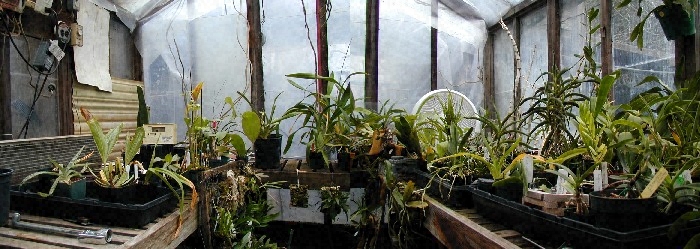
My greenhouse
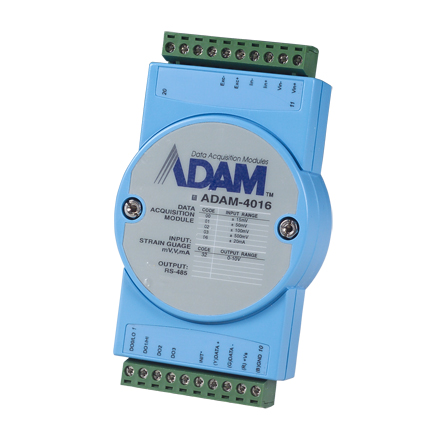
temperature is monitored by a PC. The system is designed around an
Advantech ADM 4016 analog to digital converter with an RS-485
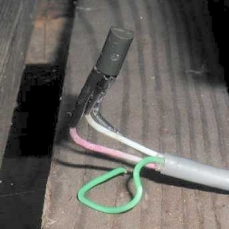
communications port. The temperature sensors are four National
Semiconductor LM34 devices. Each sensor generates a voltage
proportional to temperature which is transformed by the ADM 4016 device
to digital signals which are sent on to the computer. All
control information to and from the PC flows via an RS-485 connection.
This is similar to the standard RS-232 serial protocol except that it
is an electrically balanced line configuration that can run up to half
a mile and is much more immune to noise than RS-232. RS-485
communications hardware and protocol are in common use for data
communication except for computer network cabling. In addition, each
RS-485 connection can carry up to 16 separately addressable units, both
master, slave, and combination. The arrangement here is that
the Advantech ADM 4016 is used as a slave unit, the PC as
master.
 |
|
|
ADM 4016 controller |
Sensor |
PC's don't come with RS-485 serial output. This one is
equipped with a model 485LP9TB adapter also made by B & B
Electronics. This plugs into the standard RS-232 serial connection of
the PC and converts the electrical signals to RS-485 communications
protocol. Their web site is www.bb-elec.com and has a great deal of
useful information on RS-485 communication.
In my
particular installation, the PC is installed in the garage with about
100 feet of cable going to the greenhouse The cable contains two
shielded twisted pairs; one pair for the two data lines and the ground
return the other pair. The ground return and shield wires are connected
to one point on the computer chassis. Each of the four sensors connects
with shielded cable to the ADM 4016 converter. One
sensor is outside the greenhouse and monitors outside air temperature.
The remaining three sensors in the greenhouse monitor temperature on
two benches on either side of the aisle and one at the apex of the roof.
I first wrote a simple program many years ago using Quick
Basic to interrogate each sensor and record the date, time, and
temperature of each sensor about every five minutes. The data was
logged into a simple text file, one record per line. Periodically, the
text file was copied into Excel and plotted for local viewing. The
program has evolved into a more sophisticated system at the present
time. It is now Windows based using Microsoft Access, a
database system. The temperature chart on this website is derived from
current data in my greenhouse and is updated every hour. It
is very illuminating to see not only variations in temperature in each
area, but also correlations between areas and with outside
temperature. In addition, one sensor is continuously
monitored for temperature for diagnostic purposes. One can choose
exactly when to measure anything attached to the system with
programming. Humidity measurement has been added recently
using a micro controller and digital humidity sensor.
As far as the cost is concerned, the controller is about $200, the
serial port adapter about $60, and the sensors are about $5 apiece.
The humidity sensor and micro controller is an additional
$100. Adding in the cost of cable and other incidentals, I
came up with a figure of about $350. This may be the most convenient
and least expensive way to record temperature and
humidity remotely. It is the most flexible that I
have seen, and certainly enjoyed the process of building and
programming it. I hope this information is of value to you,
and if you do proceed, I would be happy to hear about your experience.