|
All of these neighboring towns were at one time or another contributing something to the prosperity of Elk City, it being their distribution center. But the main factor stimulating the activity and creating the hum was the continuing development of the Buster Mine. The outlying mining operations some distance from town of necessity, had to build bunk house and boarding house facilities for their workers. But the Buster, being only a half mile north of town, furnished none of these, so the men lived in town, mainly in the hotels, and walked to and from work. As activities at the mine quickened, increasingly long lines of men would emerge from the hotels each morning, and string out single file along the trail to the north, carrying work garments and lunch buckets.
The hotels not only packed the lunches for their regular boarders, but also furnished the standard lunch pails. These tin buckets were rectangular in shape, with a capacity of a half gallon or so. The lid took the form, of a small rectangular tank to hold coffee, or such other drink as might be desired. And the lid to the tank was a tin coffee cup. At the peak of operations from 30 to 50 of these lunches would be packed each morning.
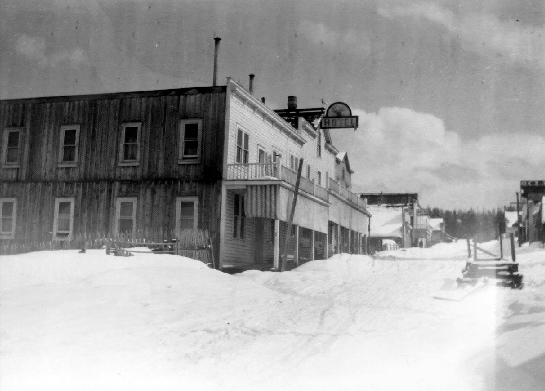
The expanded kitchen and dining facilities provided by the new addition to the hotel proved to be quite adequate for the growing business; but the rooms, sleeping quarters, were in woefully short supply. The 8 or 10 added rooms were filled immediately. So, Carpenter, Billy Johnson was again called into consultation. He had planned the whole structure quite wide, with two rows of bedrooms and a six foot hallway in between. And the roof was pitched rather steeply to help shed the winter snows. These two features created a very spacious but dark cavern of an attic, with but two windows, one in each end. A substantial stairway leading to the attic was already in place. While Johnson and helpers laid a rough lumber floor in the attic, an order was dispatched to the outside for wagon loads of iron bedsteads, springs and matresses, and bolts of heavy unbleached muslin. In a matter of weeks the attic was divided into a hallway and some 18 or 20 "rooms". with wood strip and muslin partitions. If there was little privacy in these rooms, there was less in the way of furnishings. A row of nails in a wooden cross member was the ward robe, a curtain of loose muslin was the door, and, aside from, the bed, the room contained only a wooden bench as a stand for a candle stick. But the men were glad to have even such crude accommodations. It was better than sleeping in the hay lofts of the livery stable on those cold nights. Besides, the attic project was intended to cover only the immediate emergency. The two Cheseboro lots to the west would be available on which to add another annex when time permitted. So far as the people of Elk City were concerned, the operation and the production of gold at the Duster Mine might go on indefinitely. After all, the management was spending thousands of dollars, cross-cutting, sinking, drifting, stoping, blocking out ore and building a mill. And regardless of the Buster, weren't there dozens of other equally promising prospects throughout the district? So within a year or so, the final hotel annex was started. It was a two story addition covering the two Cheseboro lots, but not extending as far back as the original building. It provided nine new rooms on the second floor, and eight a baggage room and a parlor on the ground floor. |
|