✦
Required Session Support Materials
Assignment Instructions & Other Comments
✦
Additional session support material
Be as ready as possible to answer grammar questions about these two poems in addition to their meaning.
✦
KKS MainPage elsewhere on this web site
KKS Bibliography & Links elsewhere on this web site
online versions of KKS: Virginia Text Initiative, milord club
online versions of SKKS: Virginia Text Initiative
bSpace: Excel sheet of all autumn poems in both KKS and SKKS (titled "KKS_SKKS_aki_ALL")
bSpace:
02_Shika_B
02_Shika_B_hilite
✦
yufu-tsuku-yo (link) • ogurayama (.jpeg) • hagi01 (.jpeg) • hagi02 (.pdf)
*All of the indexing I do for this class refers to session numbers, not class dates. So this day, for example, is "Session 2" not "Sept 4". You might want to put the session number on your notes together with the date so you can get back to something. (When an index says "Introduced in Session 2" you would know easily where to go.)
Beginning with this assignment, the poem page(s) is placed on bSpace in two versions. The first is the basic page(s). The second includes the word "hilite" in the file title and has highlighted in blue areas in the poem of particular concern at the level of grammar and has highlighted in yellow words that should be checked in a 古語辞典、こごじてん
bSpace:
03_Shika_C
03_Shika_C_hilite
✦
all of the below are .jpegs:
ominaeshi01 • ominaeshi02 • ominaeshi03 • inaba01 • inaba02
bSpace:
04_Tsuki_A
04_Tsuki_A_hilite
✦
kari (.jpeg)
Moon / 月
Possibility of Tohoku Dai exchange students visiting this day
05_Tsuki_B
05_Tsuki_B_hilite
✦
kirigirisu (link off site to Jse page cataloging various cricket sounds, take a listen to a few, use Shift_JIS encoding) • yomogifu (link to html page on this site)

*Please make sure you know what an 有明の月 is.
✦
Index of poems covered | Checklist for prepping poems
A little bit about crickets and cricket sounds: link to Genji Chapt 38 notes on this web site
蓬生(よもぎふ) is Chapt 15 of Genji monogatari, a chapter where Genji visits the lonely Suetsumuhana, a woman lacking in beauty. Here's another link to a depiction of moon + Genji + lady + yomogi: Genji_Yomogiu
(For those of you who have recently taken my J7A, Yomogiu is the Genji chapter reconstructed in the video segment shown about restoring the Illustrated Scroll of the Tale of Genji.)
Quiz (scored as part of the preparation grade for the day) on using charts to parse phrases in a poem.
By this day you will need to have become comfortable with using a 古語辞典、こごじてん to identify what 形、けい a conjugating word is in. I will give poems you have not seen and you will answer questions about the 形 and what it means for the structure of the sentence. For example, in session 4 we had a poem with the phrase 流れぬ秋萩 and discussed whether to put a period after ぬ but decided that it really makes more sense to consider it as the 連体形 of ず modifying the 体言、たいげん「あきはぎ」. I will provide the conjugation type of words (四段、など) so you don't actually need the body of a dictionary for this quiz, just charts (動詞、どうし・形容詞、けいようし・助動詞、じょどうし). I will try to find poems that have similar constructions as what we have covered in class through session 5 but there might be some new structures as part of the quiz or for extra credit. Note that you will not need to give the meaning of poems and vocabulary will be provided if necessary; this is a very tightly focused quiz on 形 only. I'm guessing around 5 questions in a 15-minute time slot. I will provide dictionaries for students who are using the library as their dictionary provider, otherwise you should come in with your dictionary and/or charts. The dictionaries I would bring with me are standard but might be difficult to use since it would be the student's first time seeing them. Further, you need to ask ahead for me to bring one in, since I will need to bring them from home.
*** You might want to create study groups to prep for this. Those who offer their services on the bSpace forum to help others get extra credit for that work; those who just join a group to sharpen their knowledge get extra credit for that work, too. Email me your activities so I can record it. You can physically meet, or chat, or bounce around emails. Go to the bSpace forum to find group members. If you want practice poems, consider using the KKS_SKKS_aki_ALL.xls file on bSpace>Resources.
While a quiz as "part" of one day's preparation grade has only a minor role in the course grade, this is excellent practice for the mid-term. And after this day I will expect students to have achieved a certain level of comfort with their charts for parsing future poems.
08_momiji
08_momiji_hilite
✦
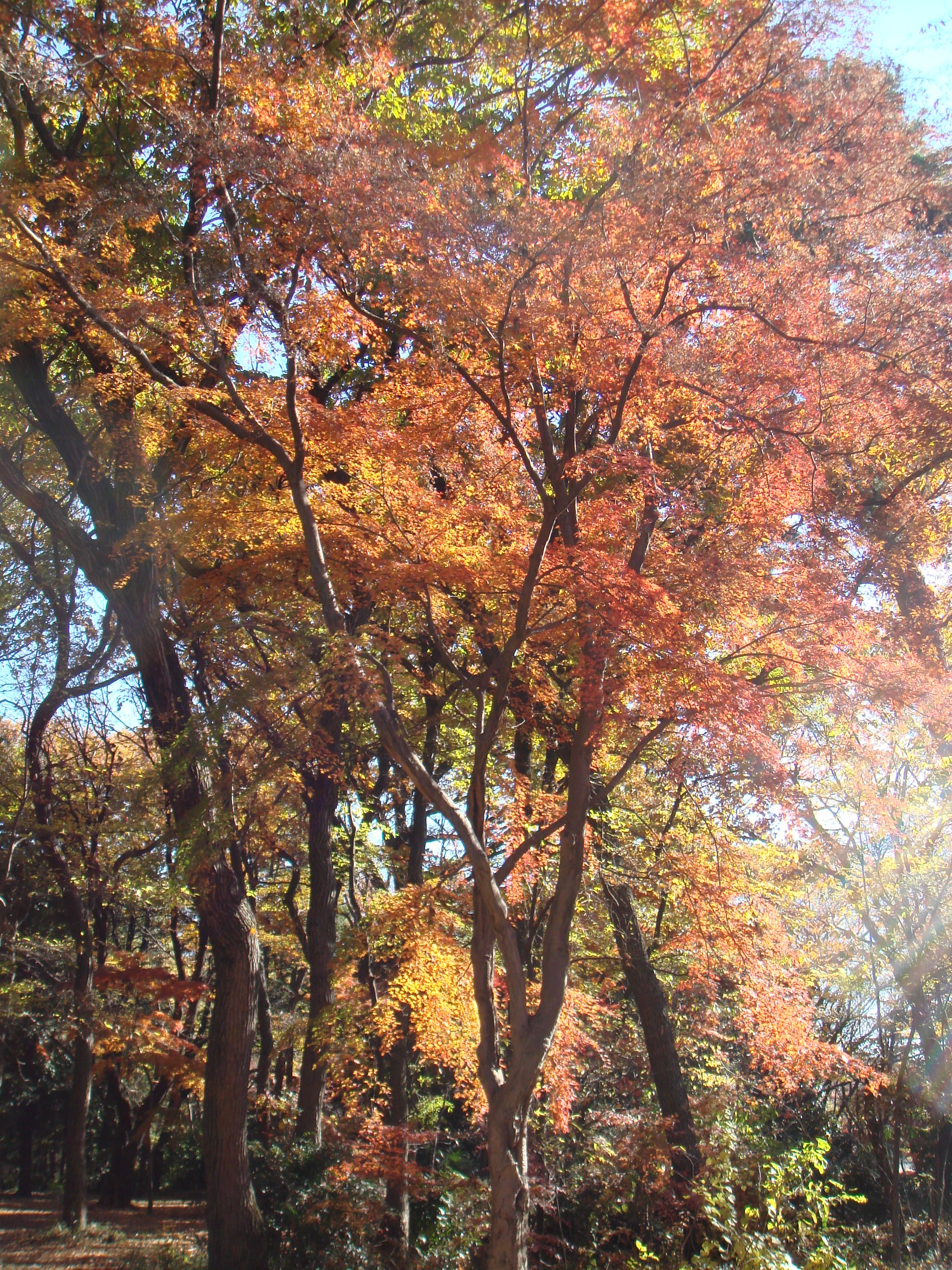
Lisa's momiji pictures:
銀杏、いちょう
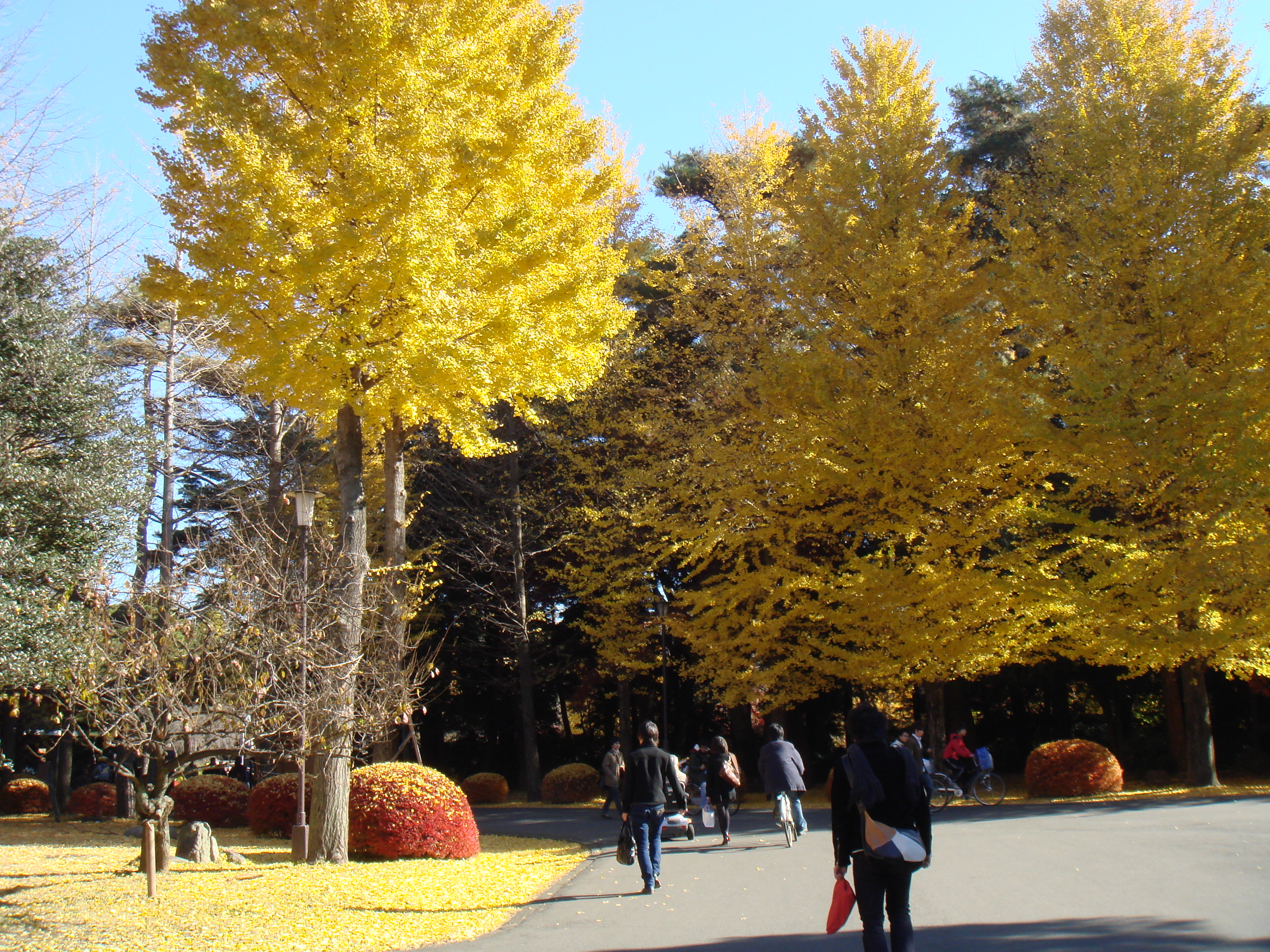
楓、かえで
bSpace:
09_Tsuyu
09_Tsuyu_hilite
✦
ogi (.jpeg)
Test One
This test will be in three parts --
-
a) reading comprehension and grammar points on poems covered in class,
-
b) questions designed to check the student's ability to use 動詞、助動詞、形容詞 charts (if 助詞 are involved, what they require ahead of them will be provided), and
-
c) meaning and interpretation questions on poems not before seen in class but using the topics presented in class (萩、露、月など)
This test will be closed book for Part A, charts only for Part B, and open book for Part C. Definitions will not be provided for Part A as it is assumed that the vocabulary has been more or less mastered for the poems already covered in class. Definitions and other information about words will be provided for Part B as necessary, to replace what would normally be gathered from a dictionary.
Laptops are acceptable for Part C and only Part C, but those who use laptops will sit on the front row facing into the room, that is, so that the laptop screens are visible to the instructor. It is possible that the poems of Part C will have online modern Japanese and English translations and/or online discussions of the poem, and the use of a laptop could be an unfair advantage.
English or hybrid Japanese/English definitions will be provided for vocabulary for poems in Part C for words that were NOT covered in poems assigned for class.
This test does not require the use of a 古語辞典 beyond the charts that it provides. If you have charts separate from this, they will be sufficient. If you copy charts from dictionaries, that will be sufficient. 古語辞典 will not be provided, nor will charts (they already have been, see bSpace).
This test is designed to determine if the student has mastered the main points listed online, become very familiar with the poems covered in class, and can bring that knowledge to poems encountered for the first time. If focuses on obtaining basic meaning over poetic interpretation, but the line between these is often a blurry one. Please remember that multimedia material given as required for class preparation is testable.
This test will take the full session and start promptly at the beginning of class. If you intend to use a laptop, please sit on the front row. You can face the front of the class for Parts A&B and reverse your position for Part C.
きりぎりす
11_Kirigirisu
11_Kirigirisu_hilite
✦
kirigirisu (link off site to Jse page cataloging various cricket sounds, take a listen to a few, use Shift_JIS encoding)
2:10-2:50PM
朗読会:方丈記・刺青
堀田氏
open for now
天河
bSpace:
12_Amanokaha
12_Amanokaha_hilite
Book 1
✦
ひそかに思う・揺れる思い
13_koi_book1_hisokaniomou.pdf
Beginning with this day, students bring to class a sheet of paper to be submitted. Read these instructions: Koiuta prep sheet instructions. Then work as directed below:
KKS 491: "Message"
KKS 507: "Reply"
KKS 522: "Diagram"
Book 2
✦
恋に乱れて・つれなさをうらむ恋
14_koi_book2_koinimidarete.pdf
Koiuta prep sheet instructions
KKS 590 "Message"
KKS 609 "Message"
Book 3
✦
きぬぎぬ・
後朝
15_koi_book3_kinuginu.pdf
15_Ise_69_Eng.pdf
Koiuta prep sheet instructions
KKS 640: "Message"
KKS 643: "Message"
Book 4
✦
ふかく思う恋・身のほどを知る
16_koi_book4_fukaku_minohodo.pdf
Koiuta prep sheet instructions
KKS 699: "Message"
KKS 712: "Message"
Book 5
✦
逢うことも間遠になって・人の心は
17_book5_aukoto_hitono.pdf
Koiuta prep sheet instructions
KKS 791: "Message"
KKS 797: "Message"
KKS 797: "Diagram" (sic)
✦
review of the five books
18_love_poems_to_categorize
The assignment for this day is different than before. Download the pdf and follow the instructions there.
The presentation of the poems is more challenging than previously. Get your 古語辞典 out!
In addition to the assignment, I have uploaded two practice sheets for one of the segments of Test Two. You can try placing the poems in the correct book of love, then check your answers by downloading the key. These are listed as "TestTwo_PracticeSetOne" etc.
✦
平安期の歌人:
小野小町
19_Ono_no_Komachi.pdf
✦
平安期の歌人:
和泉式部
20_Izumi_Shikibu.pdf
Test Two
You will be given three to five poems from the KKS or SKKS that you have not seen before. You will need to give their literal meaning, their message, and place them in the correct book of love (1-5), when they are indeed love poems. *One of the three or four will not be from a book of love but will instead be from the autumn books.
You will be given all the subcategories (ひそかに思う, etc) we have covered in class and you will need to place those in the correct books of love. You will also need to write two or three English sentences explaining one or more of them.
You will be given two or three love poems that we have covered, with one or so words missing from them. You will need to supply the correct words more or less accurately.
You will be given one extra credit love poem that requires quite a bit of deductive reasoning to determine its meaning. You will be asked what its literal meaning and message is.
This is a closed book test. Vocabulary will be provided on the test but not for major words that we have had in poems covered (autumn & love).
Th, Nov 27
n/a
no class (Thanksgiving Break)
21_Izumi_Shikibu_nikki_Part01.pdf
✦
「和泉式部日記」より(2)
22_Izumi_Shikibu_nikki_Part02.pdf
Final Exam Session 12:30-3:30
One-on-One Interviews, 9 minutes per student with a quick 1 minute to switch between students.
This interview session cannot be made-up and it is 20 percent of your grade. Plan your exam week accordingly.
Location: 215 Dwinelle
Content
I might ask grammar and/or interpretation of poems you might have seen before or of poems you have not. The best way to prepare is to look over the main points on the web. (You should already be familiar with these since they are supposed to be at least glanced over before every session.) Rereading the poems will also help. Aki and koi poems are both possibilities.
Interview content is specific for each student. It may or may not overlap in total or in part with other students.
Grading
This interview will be graded on a curve, just one letter grade, and is definitely not based on a percent of correct answers of the questions we will cover in 9 minutes. Further, each student is graded with her or his personal strengths and weakness kept in mind. It is likely I will move on to the next question if it seems we are not moving forward fast enough. This doesn't mean yo have "failed" or done poorly on a question; it just means I've decided to explore a different area. Please keep your answers brief but informative. I will be asking myself these basic questions: has the student made progress in reading waka? does the student have some knowledge (not perfect knowledge) of the main points that have been covered in class? ... things like this. I will be looking more at strategies that you turn to to work towards an understanding a poem and sensibility about the poems than correct or incorrect literal meanings of the poem. Although we will move fairly quickly from one point to the next, I do not consider speed as an important element in reading poems. I will move on just so I can ask a variety of questions.
You will earn a delicious chocolate or cookie at the end of your session
Recording of Session
I plan to audio or video record the sessions because I do not want to make notes while we are talking and I have no time to jot down notes between interviews. Therefore, the recording will be absolutely critical. Please let me know if you have a preference about audio or video recording; I might be able to accommodate your preference.
Required materials for the interview
Pencil and eraser.
Your classical dictionary. An electronic or web-based version is acceptable, but make sure you are already connected to the web and that the appropriate web page is open BEFORE being called into the interview room. I can provide a dictionary if necessary, but it will be one you are not familiar with and that might cause some time issues. Contact me about this well ahead of time. I might be able to match in the room the dictionary you use in the East Asian library.
Optional materials for the interview
This is an open book interview, so you are welcome to bring whatever is helpful to you, including class notes and so on.
Schedule
The schedule is as below. We will follow it strictly. There will be a clock in the hallway that matches the clock on my computer.
NO SUBSTITUTIONS. Your time slot is the only available time slot for you. The times printed below are firm.
You do not need to be present until your time slot but be on time (no excuses please) and you should leave the area after you are finished.
Enter the room when you see the student who is ahead of you exit the room.
Penalties
10% penalty for every minute late to the interview (61-120 seconds = 10% penalty, 121-180 seconds = 20% penalty, etc). The penalty will be calculated against whatever score was earned. This is only meant, really only meant, to make sure we all stay on time, myself included. I do not expect there to be and really hope there are not any late penalties.
Please, once you are finished, no discussing in any way your interview with those still waiting in the hall. (If you want to wait for a friend, please wait elsewhere, and agree on this BEFORE the exam, not in the hallway between interviews — there is no time to talk then.) Talking about the interview (until after 3:30) will be considered cheating since some material might be repeated. My usual penalty for cheating is an "F" for the assignment / exam involved.
INTERVIEW SCHEDULE
12:30-12:40 Hannah H 12:40-12:50 Jeremy 12:50-1 Saori 1-1:10 Lily 1:10-1:20 Kelly K 1:20-1:30 Nick 1:30-1:40 Daniel 1;40-1:50 Amy 1:50-2 Kheng
2-2:10 Lisa 2:10-2:20 Hannah C 2:20-2:30 Kelly W 2:30-2:40 An 2:40-2:50 Recca 2:50-3 Charlie 3-3:10 Adrian 3:10-3:20 Shirley 3:20-3:30 Brenden