|
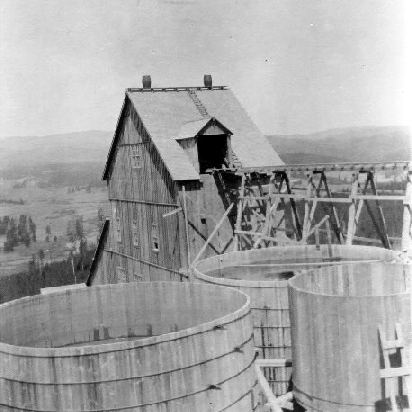
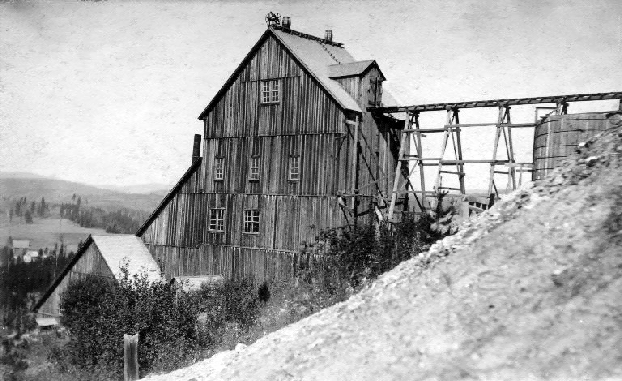
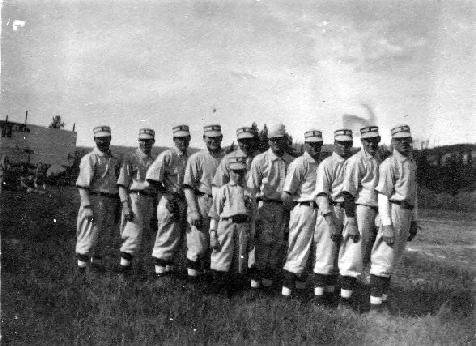
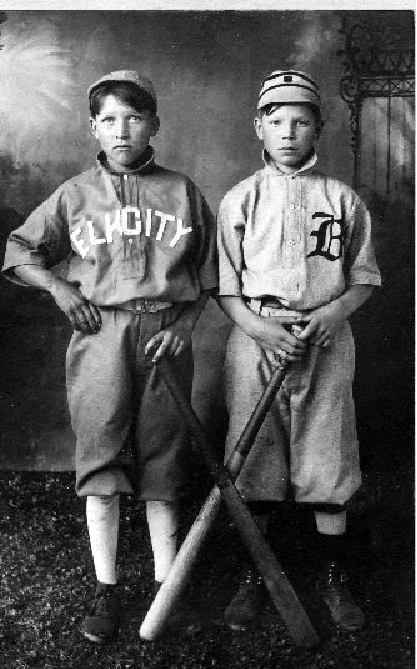
The Buster Mine itself was not really a big, enterprise, but it acted as a sort of stimulating nucleous around which other activities developed. The younger miners and workers at the Mine organized a "Buster" baseball team, and then, to offer them competition, the men in town who were employed elsewhere organized an "Elk City" team. Both teams were fitted out with fine uniforms, a diamond was cleared and levelled off in a flat area near the Buster tailings dump, a bleacher section and a lumber back-stop were erected, all with volunteer labor and contributions. "Clumsey", the painter even solicited ads and painted big signs on the back-stop to help cover some of the expenses. Although the players lacked considerable in finesse and skill, the games were always spirited and highly competitive, and the town turned out enmasse to witness the contests. The high light of the season, of course was the Fourth of July game.
During the period of the "excitement" the Fourth of July celebration usually lasted three days. In addition to the ball game, there were horse races, foot races, sack races, ladies' races etc., all held up and down the main street. There were also hand rock drilling contests hold in the vicinity, as close as granite rock format could be found exposed. In one Instance a huge rectangular boulder was, loaded on skids, and dragged to a site near town with a four horse team for use in a contest. The celebration was always inaugurated at day-break on the Fourth with a series of dynamite blasts set off as near to town as was deemed safe, rattling windows and bringing unsuspecting sleepers up with a start. In one instance the ambitious celebrants, reasoning that too much of the "bang" was dissipated into the ground when set off on the surface, rigged up a series of blasts and tied them to tree trunks and limbs a couple of hundred yards from town. Since each charge contained four or five sticks of dynamite, the effect was quite devastating. In another case a celebrating miner, apparently jaded with the small noise of ordinary fire crackers and salutes, secretly prepared a number of charges consisting of a fuse, a cap and-about a third of a stick of giant powder. He started up the street yelling "look out, everybody", and began dropping one of these charges about every 50 feet as he walked along. Needless to say, the citizenry disappeared into the buildings like magic, and there was a sigh of relief when he dropped the last charge at the far end of town. Miraculously, not a single window was broken. |
|