Aquatint etching is a technique that produces a full tonal range and rich texture in etchings. To create an aquatint, rosin dust is dropped onto a copper plate and then the rosin is melted onto the plate. This produces a matrix of small acid resistant dots across the surface of the plate. |
|||||||||||||||||||||||||||||||||||
| One of my goals is to be a resourse for other printmakers. Below are more detailed descriptions of how I create my aquatints: | |||||||||||||||||||||||||||||||||||
AQUATINT CLASS: Single rosining aquatint: Petaluma Oaks Multiple rosining aquatint: Shadows Creep-etch: Skagit Multiple-plate aquatint: Evening Reflections |
|||||||||||||||||||||||||||||||||||
![]() |
![]() |
||||||||||||||||||||||||||||||||||
| I have also written three Technical articles on aquatint etching for printmakers. | |||||||||||||||||||||||||||||||||||
| Photo by Susan Sanford © 2000 | |||||||||||||||||||||||||||||||||||
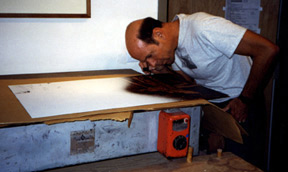
| The plate is heated on the hot plate to melt the rosin. A loupe is used to observe the progress of the melting. | |||||||||||||||||||||||||||||||||||
| To see what I am working on now, go to Print now in progress | |||||||||||||||||||||||||||||||||||
| PAGE 1, PREPARING THE PLATE | |||||||||||||||||||||||||||||||||||
| PAGE 2, DRAWING THE IMAGE | |||||||||||||||||||||||||||||||||||
| Photo by Susan Sanford © 2000 | |||||||||||||||||||||||||||||||||||
|
|
|||||||||||||||||||||||||||||||||||
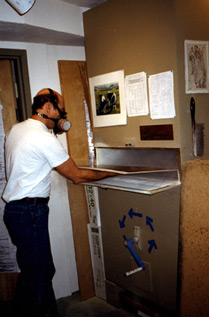
| The plate goes into the rosin box after the the crank has been turned to raise the rosin dust. | |||||||||||||||||||||||||||||||||||
| PAGE 3, MULTIPLE PLATE PRINTS | |||||||||||||||||||||||||||||||||||
| PAGE 4, PRINTING THE PLATE | |||||||||||||||||||||||||||||||||||
| The Process For Creating Lithographs | |||||||||||||||||||||||||||||||||||