 |
| Jim Harvey |
The Beat began in 1987 as a group of close friends looking for something to do when football season was over. We soon discovered that fielding a full squad softball team can be a little more difficult than sandlot football or volleyball. The founders started recruiting friends and thinking about a name and logo. Being a musical crew, we named the team after an Elvis Costello song with the vision of a true team working together as the members of a band would work together on each beat of music.
The Beat played double-headers every Sunday that spring with a local brewery team at Moscone Field in the City and finally registered as an official entry in SF City Park and Rec summer league. What we discovered, after just one game, was that the competition of league play was not the ultimate goal of some team members who preferred playing "for fun." This led to mass defections following the first league game, and The Beat went a disappointing 2-6 (the two wins by forfeit) that season. In fact, "On The Beat" was created in an attempt to keep team members' interest up through those hard times.
|
Our fearless leader at the time was none other than Jim Harvey. Jim managed The Beat from 1987 until the summer of 1993. With Jim's hardcore motivation, the addition of more interested ballplayers, and our demotion to 'D' League following our pathetic first year showing, we went into 1988 feeling like we had nothing to lose. The Beat won the second game of the season for it's first win ever 6-5 against Rockin Robin's Couch Potatoes at our favorite park, Lang Field. We went on to finish 4-4 in the spring and slowly worked our way up the ladder of success. The highlight of the season for the '88 Beat was the chance to play our arch rivals, the Van Ness Monsters, in an official league game. We lost that one, but went on to become a very competitive match for this high-ranking team.
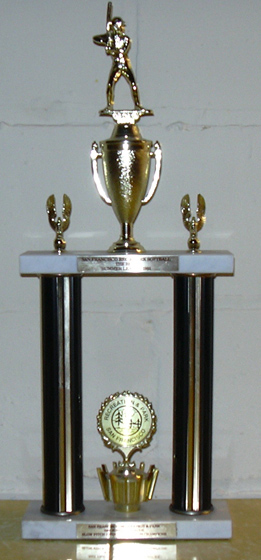
That same year marked the beginning of a grand tradition known as the "Brass Beat Award." The award was originally presented by team captain, Kevin Austin, to Jim. From Jim it became a status symbol of hard work, dedication and devotion. The keeper of the Brass Beat would hold it for one year and following the final game of the season would present it to the player that he chose as the most inspirational player of that year.
 Over
the years, The Beat roster has seen numerous player changes, but has always kept true to it's history. Unlike many league teams playing for local companies or bars, The
Beat has and always will be a group of friends. This
camaraderie has seen the team through good times and bad.
Over
the years, The Beat roster has seen numerous player changes, but has always kept true to it's history. Unlike many league teams playing for local companies or bars, The
Beat has and always will be a group of friends. This
camaraderie has seen the team through good times and bad.
The Beat won it's first divisional championship in the summer of 1991 and for the first time proved that we could be more than just competitive, we could be good! The Beat was moving back to 'DD'. The team stayed competitive in a higher division for a couple years, but in the summer of 1993, Jim Harvey moved and the team seemed to lose its driving force and direction.
Under new manager Wilfred Spoon the team struggled to find it's new identity. A poor showing in the summer and The Beat was sent back down to 'D' league. This became the rallying cry for a team that just months before was dealing with personality conflicts and infighting. At this point, The Beat swore they would never be sent down again. Averaging over ten runs per game and outscoring our opponents 76-53, The Beat went 5-1-1 in the spring of 1994 winning the division and moving right back up to 'DD' where we left off the summer before, proving to the league and ourselves that we were a veteran team that was not going to be pushed around.
|
By the summer of 1995, The Beat was on a roll and no-one was going to stand in our way. We cruised through the summer going 8-0 and once again took the division championship outscoring our opponents 106-54 and averaging over 15 runs per game. But this time we weren't working our way back, we were rising to a new level we had never seen. The Beat was going to 'C' League!
Since that championship season, The Beat worked its way up through San Francisco 'C' League, improving a little each season. In the Summer of '97, the team's 10th Anniversary and 20th season in San Francisco softball, The Beat took a step beyond their goal of finishing above .500. In the fourth week of the season, the team put together a masterful come-from-behind victory over the undefeated, first place Cool Dudes to take sole possession of first. They would hold that position for a month until faltering late in the season and finishing 1997 in a surprising second place.
|
1998 opened a new era of Beat softball as veteran Pete Wenner took over the reigns as the new manager. With Wilfred becoming the latest member of The Beat family to take his future elsewhere, Pete became the logical choice to take the team into the next century.
In the first couple years of Pete's tenure, the Beat went through a transformation to a degree not experienced since the team's formative years. Five established veterans and 8 part-timers left the team. Two absent vets were lured back from retirement and 12 new players signed on with the team. By the summer of 2000, the Beat's starting lineup boasted five players first signed by Wenner and four starting vets had taken on new defensive positions. This "new look" Beat was gaining a reputation as a powerhouse in SF City 'C' League and showed hints that their time is quickly approaching.
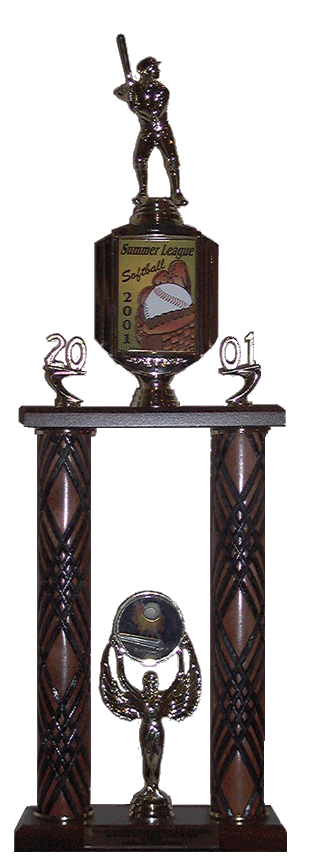 In 2001, the team took it to a level never reached before.
New rookies were brought in by head scout Gunnar
Rosenquist, and it
proved to be the shot in the arm the team had been waiting for. Still the team
managed only a 4-4 record. Pete took a chance and signed the team up for a
mid-season tournament, something the Beat shied away from after some
embarrassing losses in the early years. The team cruised to a 5-0-1
mark before hitting a 2-game losing streak, but this time those 5 wins were
enough to bring home the gold–the team's first 'C' League trophy!
In 2001, the team took it to a level never reached before.
New rookies were brought in by head scout Gunnar
Rosenquist, and it
proved to be the shot in the arm the team had been waiting for. Still the team
managed only a 4-4 record. Pete took a chance and signed the team up for a
mid-season tournament, something the Beat shied away from after some
embarrassing losses in the early years. The team cruised to a 5-0-1
mark before hitting a 2-game losing streak, but this time those 5 wins were
enough to bring home the gold–the team's first 'C' League trophy!
The team had reached it's highest level yet but were still unable to pull out their first playoff win in October. Confidence was high heading into the spring of 2002. The team played winter ball under the pseudonym "The SF Park Ratts" and finished second. However, the extra season seemed to take the fire out of the team and following a definitive 16-8 opening day victory over another summer 2001 division champion Joey J's, the Beat proceeded to fall apart losing the next 3 games and finishing the spring 3-5. We were actually asked by the league if we would be sent down, but we politely declined the offer. We knew in our hearts that we were a competitive 'C' league team.
Pete took on the task of trying to right this boat by getting
the team into another mid-season tournament. This time, the Beat took its first road trip
in 10 years, entering the Ultimate Softball
Tournament in San Jose. The team barely lost the first game then rebounded
with back to back wins to reach the quarter finals before losing to a tough
power-hitting squad with gale winds blowing out. Playing 4 consecutive games in
6 hours seemed to revitalize the team. Chemistry was building. A month later,
the team entered the City Metro Tournament. While losing 3 of 4, the team
averaged over 15 runs per game and got a good taste of night ball in the City,
the bane of the team's playoff history. The tournaments gave the team 8 extra
tune-up games for the summer. Unfortunately, the team also lost 3 more veteran
players including the last 2 Brass Beat winners.
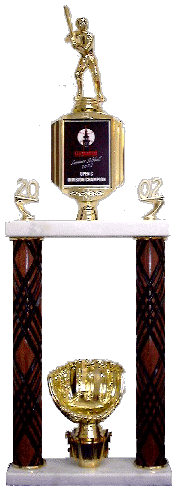
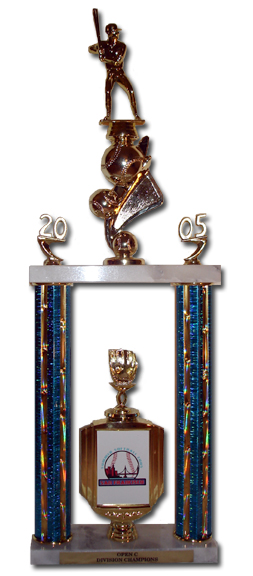
Still, the team felt good following the tournaments and the boys were ready to make team history. The summer season started with a couple close wins, but with each game the team seemed to gel a little more finishing the season with a 26-8 drubbing of Nine Inch Snails. The Beat rolled through the division undefeated outscoring opposing teams 114-59 and finishing an inconceivable 5 games over every other team in the short 8 game season. This was only the team's second undefeated season in over 15 years, and this time it was in 'C' League against much tougher competition.
The team was elated to see they would be playing 23rd Hour, the other Saturday division winner, in the first round of the playoffs and for the first time in five attempts, the Beat pulled off a victory in the playoffs--a 1-run come-from-behind thriller taking the team to the C-League semi-finals. The next game was a see-saw battle. The Beat made a valiant come-from-behind effort to take a 1-run lead in the 7th only to lose by 1 in the bottom of the frame to the team that would ultimately become the C-League champs. It was a bitter defeat, but the Beat left with the realization that they came within one run of the City C-League Championship game and very possibly a league championship.
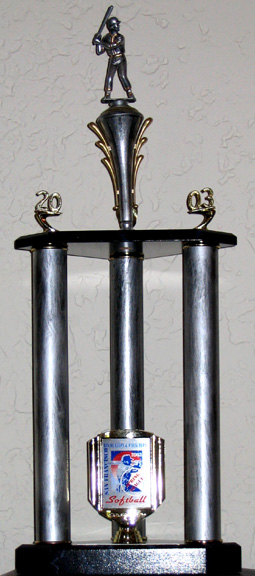 The team opened the
2003 season flat and handed upstart Ronin the first game by uncharacteristically
throwing the ball away. However this seemed to be a wakeup call to the team that
it wasn't going to be a cake walk. The team defense tightened up and starting
pitcher Kevin 'Special K' Austin seemed to come of age as the Beat held
opponents to barely 6 runs per game and never gave up more than 9 runs after the
opening loss. By game 4, the Beat offense finally got hot and the close matches
turned to blowouts. By the time the dust settled, the Beat finished the spring
season 7-1 outscoring opponents 103-54.
The team opened the
2003 season flat and handed upstart Ronin the first game by uncharacteristically
throwing the ball away. However this seemed to be a wakeup call to the team that
it wasn't going to be a cake walk. The team defense tightened up and starting
pitcher Kevin 'Special K' Austin seemed to come of age as the Beat held
opponents to barely 6 runs per game and never gave up more than 9 runs after the
opening loss. By game 4, the Beat offense finally got hot and the close matches
turned to blowouts. By the time the dust settled, the Beat finished the spring
season 7-1 outscoring opponents 103-54.
The Beat drew a first round bye in the playoffs but came into the second round like gangbusters blindsiding the established hitters 30-11 in the most lopsided playoff game in team history. The 30 runs scored was also a team record for most runs scored in a game. The beat was ready to take on the other Saturday division winner, Joey J's in the SF City C League championship. Joey's jumped out of the gate forcing the Beat to play catch-up from the start. Even with the assistance 10 walks on the part of Joey's pitcher, the Beat couldn't quite keep the pace losing 18-15, just 3 runs shy of winning the team's first city championship.
With it's grail ripped away, the Beat decided to go back to the
Metro between seasons to see if they could repeat the success of the prior year.
Unfortunately every season is different and the Beat failed miserably in the
tourney losing all 4 games including two drubbings, 12-3 and 15-2 on
consecutive nights. To make matters worse, the final tournament game included a
frightening full-speed collision between Jacque Wilson and rookie phenom Armondo
Lopez in the outfield just days before the start of the summer season.
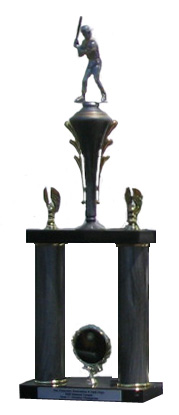
The summer picked up where the tourney left off as the team lost the opening game to Finnegan's A & B, a team they should easily beat. Again the team took notice and the defense buckled down. The team rolled to a 6-2 record and the team's third consecutive division title while again holding opponents to under 10 runs in all 6 wins. But this time the bats were on fire as the Beat rolled off an all time team high of 120 runs in just 8 games, scoring 19 or more runs in half the games. The team was heading back to the playoffs for the third time in 12 months.
When the team stepped foot on Moscone 2 for the first round playoff game against the Olympic Club Greys, victory was in the air. With manager Pete Wenner missing due to a prior engagement, the team's leadoff hitter and 2003 Brass Beat Winner Jacq Wilson got stuck in traffic and missed the opening pitch forcing the team to rearrange the order at the last minute. Still the team mustered a nice rally and took the field with what they thought was a comfortable lead. However the Beat bats went silent in the second and the team would never score another run falling to their worst defeat in the playoffs since the early '90s; a 21-6 mercy-rule loss. Now the team had to wait through a long winter before taking another shot at the gold.
 In
2004, the Beat was handed the toughest division they'd ever seen; a 5
team division with two games each against the 2003 Spring City Champions, Joey
J's (now the SF Slammers) and the 2003 Summer Champs, Ronin. This was the test the team had been
waiting for and they were up to the challenge. Excelling on both sides of the
ball, the team rolled through the first seven games manhandling Joey J's while
posting a close victory over Ronin. With the division won and a comfortable 12-3
lead against Ronin in the season finale, a decision was made to change pitchers
as a warm-up for the playoffs and Ronin scratched back for a surprise 14-12
victory. Still, the team posted a respectable 7-1 record outscoring opponents
119-63 as Austin set a new team standard with a 3.94 era.
In
2004, the Beat was handed the toughest division they'd ever seen; a 5
team division with two games each against the 2003 Spring City Champions, Joey
J's (now the SF Slammers) and the 2003 Summer Champs, Ronin. This was the test the team had been
waiting for and they were up to the challenge. Excelling on both sides of the
ball, the team rolled through the first seven games manhandling Joey J's while
posting a close victory over Ronin. With the division won and a comfortable 12-3
lead against Ronin in the season finale, a decision was made to change pitchers
as a warm-up for the playoffs and Ronin scratched back for a surprise 14-12
victory. Still, the team posted a respectable 7-1 record outscoring opponents
119-63 as Austin set a new team standard with a 3.94 era.
Boasting a 29-4 record over a 2-year span, the Beat was going
to the playoffs with it's fourth
consecutive division title and unfinished business at hand. The first
round opponent was the other Saturday division winner and long-time rival Il Pirata
(formerly Connecticut Yankee, DOA, Doom, 23rd Hour...). The Beat put a few runs
on the board but in the bottom of the first Il Pirata's first baseman drove a liner off
pitcher Austin's foot. Determined to stay in
the game, Kev continued to pitch but the team's bubble seemed to burst. The
defense made a number of errors and uncharacteristically offered
up 8 unearned runs. The Beat battled back late in the game but once again walked off losers in the playoffs dropping their first
and only post-season game of 2004 14-12.
To lighten the mood, the team held it's second Old Timers' Game in June of 2004. This was the first time in 14 years for the event, and it was one for the ages. The old timers, all members playing under Jim Harvey prior to 1993, fielded a team of 15 against the young core of the 5-time 'C' league division champs. The old timers held their own mounting a late 2-out rally in the last inning to bring the game close at 15-8, but as expected the youngsters took the game. This was a rare opportunity for ex-players from all over the country and Canada to meet again, many for the first time in over a decade. It was also an excellent opportunity for the youngsters to meet the players that built the team from its infancy and for the veterans to meet the young players who have taken the team to it's current status as perennial division favorites.
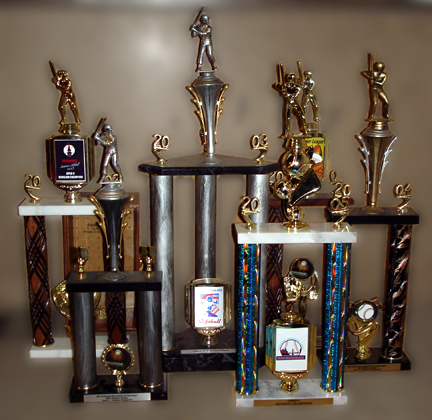
In 2005, the Beat posted another solid 13-3 year, losing 2 games in the spring to the undefeated Flor de Cana. The third loss came in the last game of the summer against the SF Ballers, but the Beat still walked away with it's 6th division title in 9 seasons with a 7-1 summer record. The team broke its single season scoring record of 120 runs set in the summer of 2003 by scoring 122 in just 7 games. Had it not been for a forfeit of game 7, the Beat likely would have set another season record for least runs allowed in an 8 game season. The record set in the summer of 1993 was 54 runs, and through 7 games the Beat allowed only 47. Add in a 1-0 score for the forfeit and the Beat outscored opponents 123-47 in the summer of 2005.
Unfortunately, the playoffs set the Beat against their new nemesis and the only team the Beat had yet to beat, Flor de Cana. Flor, the C-6 champions from the other Saturday division, came out swinging and swamped the Boys in Gray out of the playoffs with a 19-8 drubbing that wasn't even that close. This was the 3rd straight 1st round loss for the team since Spring 2003 and 4th consecutive postseason loss overall.
Following a very average 8-8 season in 2006, the Beat rebounded in 2007 for it's 20th Anniversary after picking up rookie sensation Tim Smith. The team started flat losing the first two games of the spring before turning in a record-setting performance by scoring 70 runs over 3 consecutive games culminating in a 19-17 victory over La Libertad (a briefly renamed Flor de Cana) finally removing one of the largest monkeys ever from the team's back. The Beat finished out of contention at 5-3 and struggled through the SWC tournament in the summer though they did start the tourney winning a 15-0 mercy rule shutout on the back of Special K's 1-hitter against a doormat called Stogies.
The Beat kicked it into gear in the summer with mercy rule victories over Ronin (22-1) in the season opener, Old Clamhouse (25-3), Il Pirata (20-1), and Sledgehammers (27-12). Along the way the team set more records than any one season in the team history including new records for runs scored in a season (153) and year (278), Hits in a season (178) and year (322), RBI in a season (127) and year (233), team average in a year (.513), team slugging in a season (.742) and year (.717), team homers in a season (12) and year (22) plus individual records for hits by Tim Smith (24 season, 42 year), runs by Jacq Wilson (23 season, 39 year), RBI by Mondo Lopez (26 season, 40 year) and triples also by Mondo (7). Manager Pete Wenner and pitcher Special K both broke the 100 win milestone and Mark St.Georges broke the 500 hit milestone.
The team rolled to a 7-1 record in the summer with the only loss at the hands of Flor de Cana with whom the Beat tied for the division title forcing a week night divisional playoff. Flor again took the upper hand and the division outscoring the Beat 22-5. However just a couple years prior the league instated a second "wildcard" spot in each division and the Beat made it to the playoffs for the first time in two years. The Beat hammered Toronado in a first round mercy rule 20-5 for the team's first playoff victory since 2003. Unfortunately the powerhouse offense fell flat in the quarterfinal losing to Bloom's Kamikazes 11-7. Still an incredible 20th anniversary season in which the team outscored our opponents 153-87 with four mercy rule victories in the regular season and one in the playoffs. Over the entire year (including the SWC tournament), 9 of the teams 14 wins were by 12 runs or more.
 |
For much more detail on the teams history
check out the old
game articles at the OTB News Archive
or read OB's
memoirs, The Best Seat in the House.
 |
 |
 |

